
The European Bloodlines Behind Vom Eistobel
Preserving elite European German Shepherd heritage in Canada
At Vom Eistobel, our breeding program is not defined by trends, marketing cycles, or short-term popularity. It is defined by lineage. More specifically, it is defined by a carefully preserved European German Shepherd heritage that has been developed over decades across Poland, Germany, and surrounding European breeding programs.
These bloodlines were never created for mass production or aesthetic novelty. They were developed through generations of deliberate selection, where each pairing was made with purpose: to improve structure, stabilize temperament, strengthen health, and maintain breed integrity.
What exists today within Vom Eistobel is not the beginning of something new. It is the continuation of something already proven.
A lineage built on intention, not chance
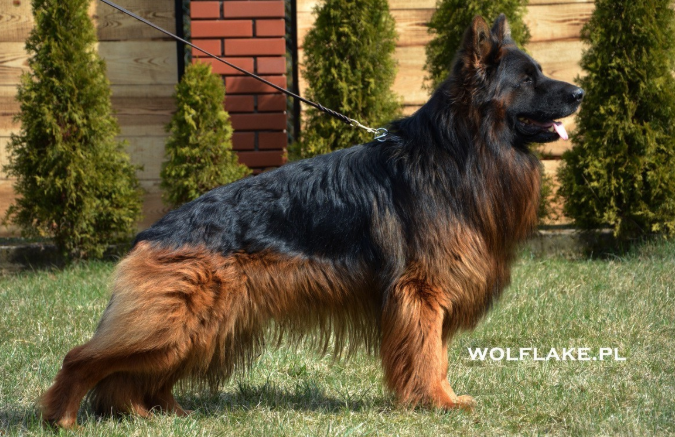
The foundation of our program traces back to influential European Long-Haired German Shepherd lines, including dogs such as Vegas du Haut Mansard, Collorado Jarkowski Dwór and Baston z Heydlowego Wzgórza.
These names represent far more than pedigree entries. They reflect generations of deliberate, structured breeding decisions made by European kennels with a clear objective: to produce German Shepherds that remain correct in structure, balanced in temperament, and consistent in reproduction.
Dogs from these lines were never valued for isolated achievements. Their significance is defined by what they consistently produced over time.
Their true influence is found in their offspring, where repetition of correct structure, stable temperament, sound health, and functional type becomes the defining outcome. While titles and individual accomplishments may highlight momentary excellence, it is reproductive reliability that determines lasting value in preservation focused breeding.
This is what makes these bloodlines foundational. They do not represent single expressions of excellence, but a continuous transmission of predictable, reliable traits across generations.
It is this ability to reproduce quality with consistency that gives them enduring importance within structured European breeding programs, and why their influence remains central to the dogs produced today.
How European breeders defined true quality
To understand why these bloodlines became so highly respected throughout Europe, it is important to understand how excellence was traditionally measured.
European breeders did not evaluate a dog solely on what it achieved as an individual. The true measure of quality was whether those traits could be preserved and reproduced generation after generation.
Correct structure alone was not enough. The dog had to consistently pass that structure forward. Strong temperament was not enough unless stability remained evident throughout the pedigree. Even exceptional working ability held limited value if it could not be reliably inherited by future generations.
This philosophy created bloodlines built on predictability rather than chance.
The most respected dogs were not simply outstanding representatives of the breed; they became proven producers whose influence could be seen repeatedly in their descendants. Their value was measured not by a single achievement, but by their ability to preserve and strengthen the qualities that define the German Shepherd Dog.
This is where the significance of these bloodlines truly emerges.
They were developed with the understanding that excellence should never be accidental. It should be preserved, reproduced, and carried forward with intention.
Structure as the foundation of preservation
One of the defining characteristics of these distinguished European bloodlines is their remarkable structural consistency.
For generations, breeders selected dogs based not on extremes or passing trends, but on correct anatomy, balanced angulation, strong toplines, and efficient, ground covering movement. The objective was never exaggeration. The objective was functionality.
This disciplined approach preserved the German Shepherd Dog as it was originally intended, a versatile working breed capable of endurance, athleticism, and sound performance throughout its life.
Within these pedigrees, certain influential sires appear repeatedly across generations. Their prominence was not the result of popularity, but of proven genetic value. They consistently reproduced correct structure, sound movement, and overall breed quality, becoming foundational contributors to some of Europe's most respected breeding programs.
Their influence helped create a level of predictability rarely achieved by chance alone. Through careful selection and preservation, these bloodlines became known not only for producing exceptional individuals, but for reliably passing those qualities forward generation after generation.
This consistency remains one of the hallmarks of true European breeding excellence and one of the reasons these bloodlines continue to be valued today. At its core, it reflects a commitment to preserving the qualities that have defined the German Shepherd Dog for generations.
Health as a non-negotiable standard
Health has always been equally important to structure within respected European breeding programs. These bloodlines were developed through generations of careful selection focused on orthopedic soundness, physical durability, and long term functional stability.
Health evaluations were never viewed as optional considerations. Hip and elbow certifications, genetic screening, and the assessment of health throughout multiple generations became essential components of responsible breeding decisions. Only dogs that demonstrated the qualities necessary to strengthen the breed's future were incorporated into these programs.
Over time, this commitment helped establish bloodlines recognized not only for their appearance and working ability, but also for their consistency, resilience, and overall soundness. Longevity and physical stability became qualities that breeders worked to preserve generation after generation.
This dedication to health remains one of the defining characteristics of these distinguished European pedigrees. It reflects a breeding philosophy centered on preservation, where every generation is carefully evaluated to ensure that strength, soundness, and quality continue to move forward.
Today, these bloodlines remain highly sought after because they represent more than individual excellence. They represent generations of intentional breeding designed to protect the health, functionality, and integrity of the German Shepherd Dog.
Temperament shaped for real environments
While structure and health provided the foundation, temperament is what ultimately ensured the lasting value of these bloodlines.
For generations, European breeders placed tremendous importance on producing dogs with stable, balanced character. Confidence was valued, but not instability. Intelligence was essential, but not at the expense of clear thinking and reliability. Social engagement was encouraged while preserving the natural strength and self assurance that define the German Shepherd Dog.
The objective was never to create extremes. It was to preserve balance.
These dogs were expected to possess the ability to work when required, learn willingly, and remain dependable in a variety of environments. Equally important, they were expected to integrate naturally into everyday life as trusted companions and family members.
Through careful selection over multiple generations, breeders established bloodlines known for their consistency of temperament and their ability to adapt without sacrificing the qualities that made the breed exceptional in the first place.
This balance remains one of the defining strengths of these distinguished European pedigrees. It is also one of the reasons they have transitioned so successfully into modern preservation programs, where sound temperament, trainability, and stability are valued as highly as structure and health.
At its core, temperament is what allows a German Shepherd Dog to fulfill its purpose. Not simply as a working dog, but as a capable, dependable partner whose character can be trusted generation after generation.
The long-haired expression of the breed
Within this genetic framework, long coat German Shepherds emerged as a refined expression of type rather than a separate breeding direction.
In these lines, coat quality was never permitted to compromise structural integrity. Instead, it was developed and stabilized alongside correct anatomy, resulting in dogs with dense undercoats, pronounced mane development, and proper feathering while maintaining functional form and balance.
This relationship between coat and structure is uncommon and requires deliberate, consistent selection across generations. When not carefully managed, coat variation can often coincide with a loss of type or functional clarity. Within these European pedigrees, however, both elements were preserved in harmony.
This balance remains one of the most distinctive characteristics carried through the foundation dogs of Vom Eistobel, reflecting a breeding philosophy focused on preserving complete type rather than isolated traits.
The influence of Collorado, Baston and VEGAS
Among many of our carefully selected dogs, three particularly influential sires stand out. Each is well recognized within European breeding for the consistency of their traits, temperament, and their lasting impact on type and genetic reliability across generations.
Within this broader framework, certain foundation dogs played a defining role in shaping the modern expression of these established European bloodlines.
Collorado Jarkowski Dwór became an influential presence in Polish long coat development through his consistent ability to transmit correct type, balanced temperament, and strong masculine expression. His lineage reflects the structured Polish approach to long coat preservation, where correct coat development was maintained alongside functional anatomy rather than prioritized at its expense. His value lies in the predictability of his offspring, where correct traits appear with continuity rather than variation. In preservation focused breeding, this consistency is essential for maintaining type integrity across generations.
Baston z Heydlowego Wzgórza represents a different but equally critical strength within structured breeding programs. His pedigree is built on lines known for stability, uniformity, and repeatable type expression, resulting in offspring that remain consistent in structure, temperament, and overall breed character across multiple generations. This level of genetic reliability provides breeders with a stable foundation, reducing variation and reinforcing long term breed consistency.
Vegas du Haut Mansard became one of the most influential sires in modern West German show line development through his consistent ability to transmit correct structure, strong pigmentation, and a clear, expressive masculine type. His pedigree reflects concentrated influence from some of the most successful West German breeding programs of his era, where emphasis was placed on anatomical correctness, type stability, and reproductive strength. His significance is not defined by isolated traits, but by the reliability with which these qualities were reproduced across multiple generations. In structured breeding programs, this level of prepotency is what preserves type, ensuring it remains unified, recognizable, and resistant to dilution over time.
Together, these three dogs represent complementary pillars of preservation breeding. One reinforces the consolidation of correct modern West German type, one strengthens long coat structure within a functional framework, and one provides broad genetic stability across generations. When combined within a structured program, these influences allow for refinement without distortion and consistency without loss of type or function.
This balance is what gives their influence lasting relevance within modern European bloodlines, where the objective is not only to produce quality dogs, but to preserve that quality in a repeatable, measurable, and genetically stable form across generations.
Photo & Ownership Disclaimer
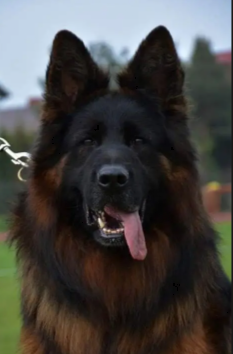
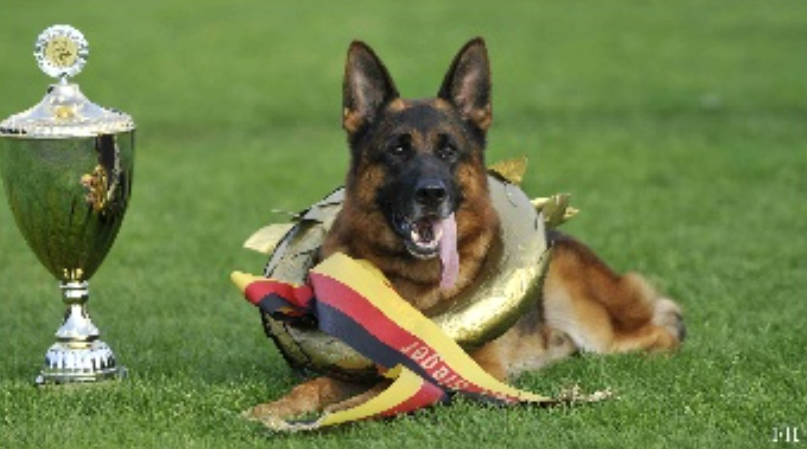
The photographs featured in this section are provided solely for historical and educational reference to illustrate the influential bloodlines that have helped shape the European Long-Haired German Shepherd. These dogs are not owned by Vom Eistobel, and the images remain the property of their respective owners, breeders, photographers, or copyright holders. Their inclusion is intended only to acknowledge the remarkable dogs and bloodlines that form part of our breeding heritage and should not be interpreted as implying ownership, endorsement, or affiliation with Vom Eistobel.
How these genetics live on at Vom Eistobel
The dogs within our program represent a deliberate concentration of some of the most influential European German Shepherd bloodlines, selected not for popularity, but for their proven ability to produce consistent, functional type across generations.
The Vom Eistobel foundation is built upon carefully selected European bloodlines that include influential sires and dams from the distinguished Haus Tchorz lineage together with some of the most renowned sires in modern German Shepherd development. To name a few well renowned sires, the foundation includes Ray vom Fichtenschlag, Zamp vom Thermodos, Roy Terra Lupiae, Remo vom Fichtenschlag, and Bruno von Vierhundert Hertz, all of which are widely recognized within European pedigrees because they contributed at a structural level to the modern expression of the German Shepherd Dog, particularly in anatomy, pigment strength, working ability, and reproductive reliability. These bloodlines appear consistently throughout elite European pedigrees and continue to shape the modern expression of the German Shepherd Dog through their contribution to type, temperament, and genetic stability.
Equally important to this foundation are respected breeding programs such as Vom Ermeland Kennel and Rob-Kruan Kennel. Within European breeding circles, these kennels are recognized for their disciplined selection standards and their commitment to preserving correct type rather than pursuing short term variation. Their influence is reflected in the stability of the lines they developed, where structure, temperament, and working ability remain consistently preserved across generations.
At Vom Eistobel, these genetics are not treated as historical reference points, but as active building blocks within a preservation based breeding program. Each line is selected for proven prepotency, meaning the ability to reliably transmit desired traits without dilution, inconsistency, or loss of type over time.
This is the reason these combinations were chosen. They provide a level of genetic reliability that allows structure, temperament, and type to remain stable and predictable rather than fluctuating between generations.
Within this framework, the consistency seen in Vom Eistobel dogs is not accidental. It is the direct result of building upon established European foundations already proven through programs such as Ermeland Kennel and Rob Kruan Kennel, and preserving those qualities through disciplined selection focused on long term breed integrity rather than short term variation.
Preservation as a responsibility
The goal of our breeding program is not to multiply dogs. It is to maintain continuity.
Every pairing is evaluated with long term genetic direction in mind. Structure, temperament, health, and functional type are not treated as separate goals, but as interconnected requirements that must remain balanced and consistent across generations.
This responsibility becomes especially important when working with established European bloodlines that have been carefully developed over many generations. These lines already carry a defined genetic framework for structure, temperament, pigment, and working ability. Their value lies in their predictability and the stability they produce when preserved in their original form.
Introducing outside influence may create variation, but it also risks weakening the consistency that has been intentionally built into these pedigrees. In preservation based breeding, consistency is not accidental. It is the result of disciplined selection and long term planning. Once diluted, it cannot be reliably reconstructed in a single generation.
For this reason, our responsibility is to continue these bloodlines with integrity rather than alter them. The objective is not to reinvent what already exists in a stable and proven form, but to preserve it so that its defining qualities remain intact for future generations.
This approach requires restraint as much as it requires selection. Not every combination is pursued, and not every trend is followed. Instead, each decision is made with the intent of preserving what has already proven its value.
Within this framework, maintaining the original European structure of these bloodlines is not a preference. It is a commitment to preservation, ensuring that the type, temperament, and function that define them remain consistent, recognizable, and true to their foundation.
Continuing a proven legacy
Vom Eistobel exists to ensure that these established European bloodlines remain intact as they transition into a new environment in Canada.
Not diluted. Not altered for convenience. Not reshaped for trend cycles.
Instead, preserved with intention, discipline, and continuity.
Every pedigree represents more than ancestry. It reflects decades of deliberate selection by European breeders who prioritized structure, health, temperament, and functional ability as interconnected requirements rather than isolated traits.
These decisions were made with long term genetic direction in mind, producing bloodlines defined by stability, predictability, and correctness across generations. Their value lies not only in what they produce today, but in what they consistently preserve over time.
Our responsibility is to continue that work without compromise. To maintain what has already been carefully established, and to ensure that these genetics remain intact, functional, and true to their foundation as they continue forward in Canada.
In this way, preservation is not a concept. It is a commitment carried through every generation.
Preserved in Europe. Protected in Canada. Continued through Vom Eistobel.
We exist to preserve what others have only inherited. A living European legacy of structure, temperament, and health carried forward with intention in Canada.